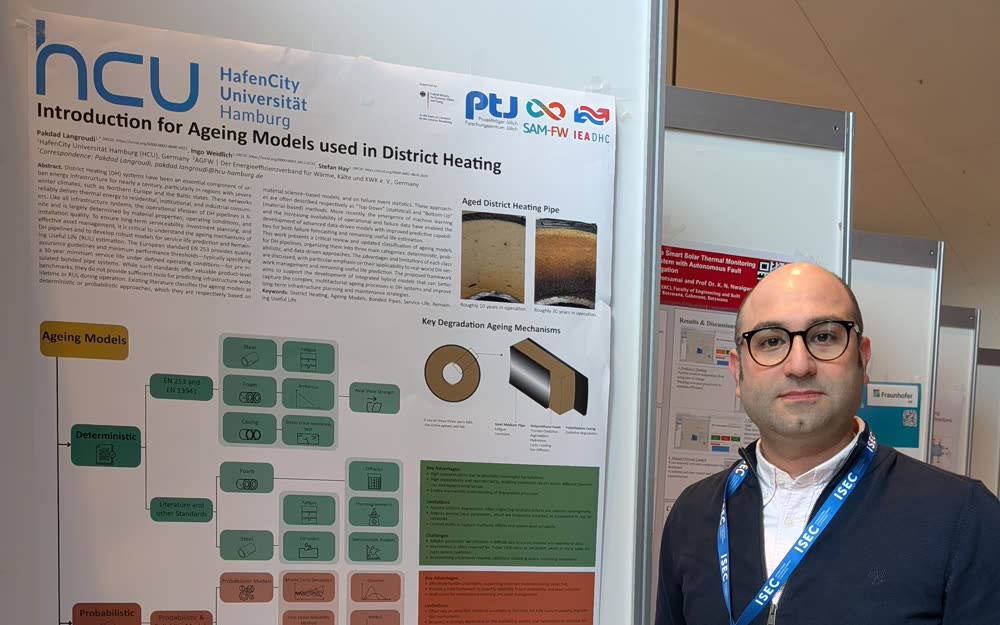
Ageing & Remaining-Life Modelling
Classifying how engineered materials degrade, then estimating remaining service life from physical evidence rather than age alone — validated on buried pipe.
Predictive Maintenance · Asset Management · Applied AI
I turn operational data from ageing infrastructure into decisions about what to repair, replace, or leave alone — combining machine learning, physical simulation and materials analysis. Proven on district heating networks; the methods travel.
01 — The path
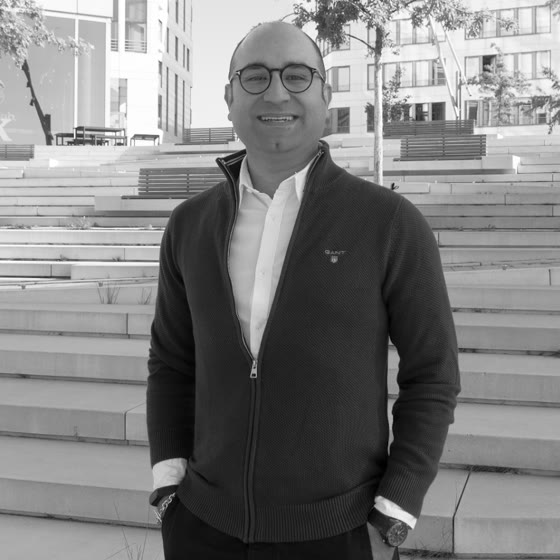
I trained as an architect. I now build models that predict when buried infrastructure will fail. The distance between those two is the point — and an interdisciplinary education is what made it crossable.
2007–2012
Architectural Engineering
Bachelor
Where I learned to design physical things that have to work — materials, loads, and the distance between a drawing and what actually gets built.
2014–2016
Architecture
Master, abroad
I moved to continue in the same discipline and go deeper into it.
2016–2019
REAP
Master, interdisciplinary
Resource Efficiency in Architecture and Planning — interdisciplinary by design, and the turning point. This is where I understood that what I had learned could be carried much further than the field it came from.
2019 – now
Where that took me
Far transfer, applied
Infrastructure engineering. System reliability. Laboratory methods never used this way before. Machine learning. Different fields — the same training, carried across.
None of it was only study. There was work beside every stage — drafting, then three years in an architecture practice, then an internship abroad during the master's, then building the software that runs laboratory equipment.
Far transfer is the thread. Each step carried the one before it into a field it was not built for — which is why measuring pipe density with X-ray microscopy, or turning laser spectroscopy on polyurethane foam, was the obvious move rather than a leap.
02 — About
I work where data science meets physical infrastructure. My research builds predictive maintenance and asset management methods: models that estimate how far a buried, hard-to-inspect asset has moved through its service life, and frameworks that turn that estimate into a defensible decision about intervention.
The work runs the whole chain — instrumenting lab experiments and writing the software that drives them, characterising material ageing by spectroscopy and X-ray microscopy, simulating thermal and mechanical loading history, and training models on years of operational time-series data.
A recurring thread is taking measurement techniques to problems they have not been used for. I brought X-ray microscopy, laser-induced breakdown spectroscopy and infrared spectroscopy (FT-IR / FT-NIR) to the study of polyurethane foam ageing in pre-insulated pipes — none of which had been applied to this material for this purpose — and developed the processing algorithms myself, because no laboratory software existed that could do the analysis.
District heating networks have been my proving ground. The underlying problem — deciding when ageing assets you cannot easily inspect need attention, and justifying that call with evidence — is common to water, gas, power and transport infrastructure alike.
Areas of experience
Skills & competencies
Modelling & data
Signal, spectra & images
Instrumentation & engineering software
Working environment
Work experience
2019 – now
Research Associate, Infrastructure Engineering
HafenCity Universität Hamburg
2016 – 2019
Student Assistant, Data Analysis & Software Development
HafenCity Universität Hamburg
2015 – 2016
Intern, Architecture
PlanAir Studio
2011 – 2014
Architect & Architecture Assistant
Shahr & Andisheh Consulting Engineering
2009 – 2010
Draftsperson
Dibache Memari
Education
2019 – now
PhD candidate — Predictive Maintenance
HafenCity Universität Hamburg
2016 – 2019
M.Sc. — Resource Efficiency in Architecture and Planning (REAP)
HafenCity Universität Hamburg
2014 – 2016
M.Sc. — Architecture
Politecnico di Milano — Piacenza
2007 – 2012
B.Sc. — Architectural Engineering
Azad University — Shiraz
International roles & recognition
current
Contributor — IEA DHC Annex TS6
Status Assessment, Ageing, Lifetime Prediction and Asset Management of District Heating Pipes — international expert group spanning Austria, Denmark, Germany, Italy, South Korea and Sweden.
to 2023
Contributor — IEA DHC Annex TS4
Digitalisation of District Heating and Cooling. Co-author of the final guidebook, a ~40-contributor international collaboration.
Holcim Study Award for Sustainability
Awarded for work on automated characterisation of heterogeneous construction materials.
Languages
Off the clock
03 — Research
“What I love about science is that as you learn, you don’t really get answers. You just get better questions.”
Classifying how engineered materials degrade, then estimating remaining service life from physical evidence rather than age alone — validated on buried pipe.
Recovering the load an asset has already absorbed when nobody recorded it — back-simulation over sparse sensor data, so decisions rest on the real duty history.
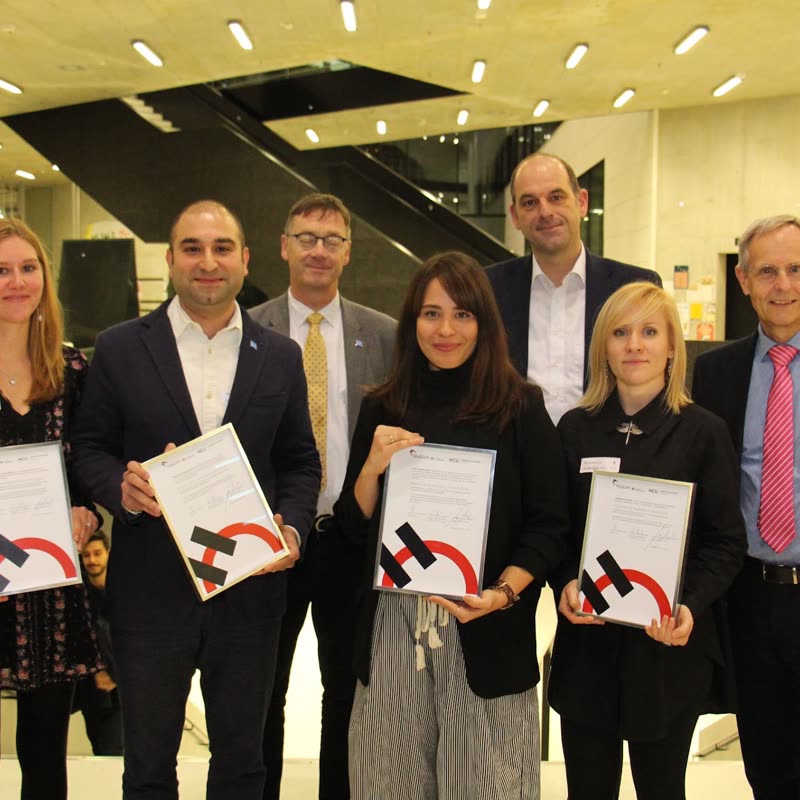
Laser spectroscopy plus classification to quantify heterogeneous materials automatically — replacing slow, manual sample preparation. Award-recognised.
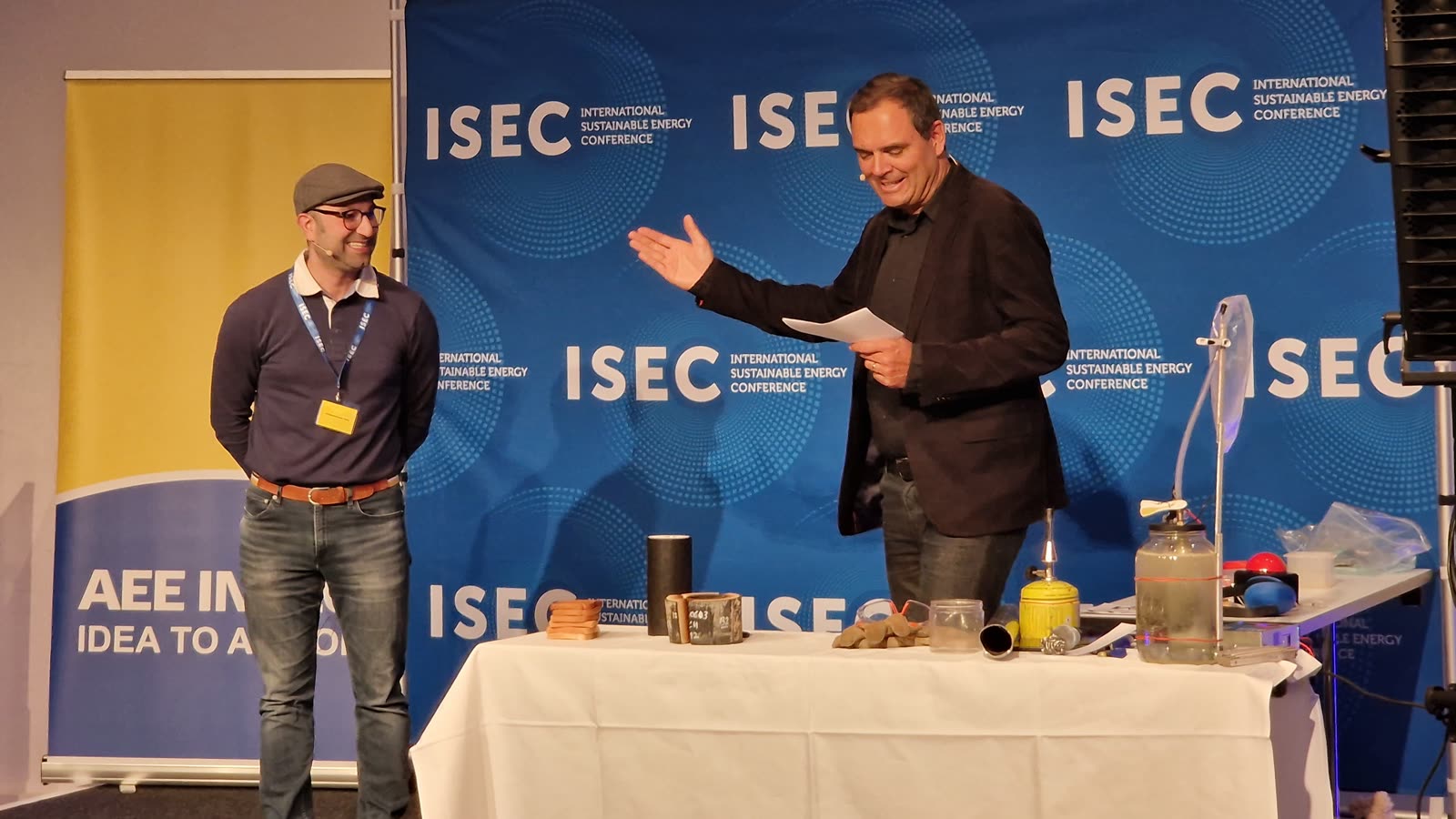
Destructive testing to failure, with the acquisition software and rigs built in-house — the ground truth the models are calibrated against.
04 — Publications
Sixteen peer-reviewed articles, conference papers and reports — ten of them as first author — on pipe ageing, thermal simulation, asset management and materials analysis.
As first author
Co-authored & contributed
Work up to 2022 was published under the name Pourbozorgi Langroudi. Both forms resolve to the same ORCID record.
05 — Contact
Happy to talk about predictive maintenance, asset management, or anything data-shaped — in any infrastructure sector.
me@pakdad.comCompleting my PhD and open to new opportunities from 2027 — R&D, energy transition and infrastructure data roles, in industry or the public sector.